


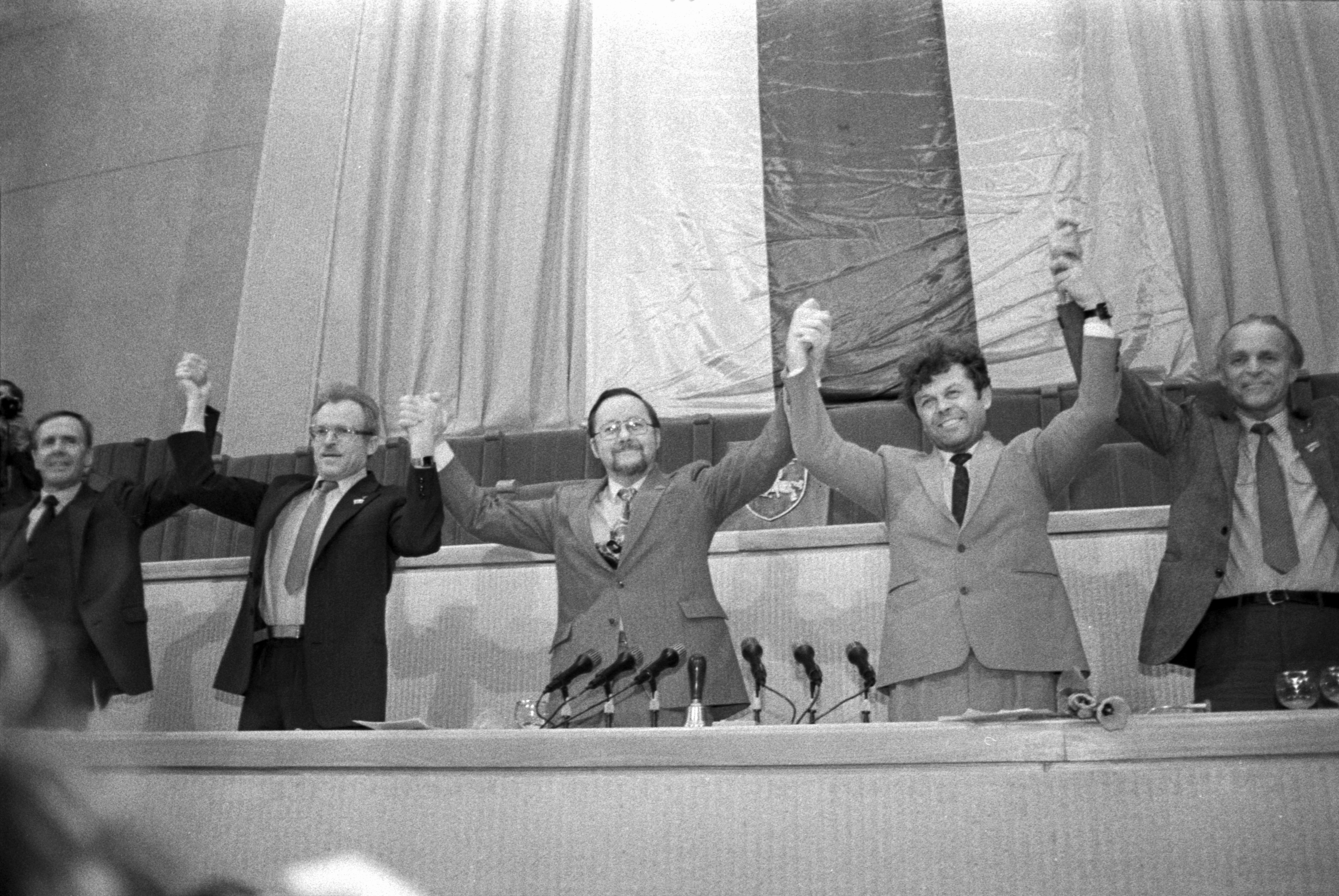


In an increasing climate of openness of Soviet Union, following events like the fall of the Berlin Wall and the Baltic Way, February 24, 1990, witnessed the first free elections in Lithuania since 1926, and the only free elections held in Soviet Lithuania. Non-communist candidates were allowed to run and, unsurprisingly, Lithuanians voted massively for the candidates endorsed by Sąjūdis, even though the movement was not a political party, establishing the first non-communist government. Sąjūdis candidates won no less than 91 seats. In March 11, 1990, Vytautas Landsbergis was elected chairman of the Supreme Soviet of the Lithuanian SSR, the main legislative institution of the Lithuanian SSR – or rather “President of the Republic of Lithuania”, taking Brazauskas’s place. In this capacity, on the same day, Landsbergis restored Lithuania's prewar name of “Republic of Lithuania”, and changed the name of the Soviet into Supreme Council of the Republic of Lithuania. The act established officially Lithuanian independence, and was approved by 124 members of the council, with no votes against and only six abstained. With this officially-called “Act of the Re-Establishment of the State of Lithuania” (in Lithuanian: Aktas dėl Lietuvos nepriklausomos valstybės atstatymo), Lithuania became the first Soviet republic to declare its independence from the USSR, establishing a historical precedent that was soon followed by Latvia and Estonia. Moldavia was the first country to acknowledge the declaration inside the Soviet Union. The international community, instead, hesitated for another year.
Needless to say, the Soviet leadership did not welcome the news enthusiastically. As a response to the Act, on April 20 the Soviets imposed an economic blockade to Lithuania. Fuel, essential goods, and even hot water were in shortage for 74 days. Despite the difficulties, Lithuania did not step back, but relations remained very tense for about a year, when they tragically escalated. In the meantime, in December, the Lithuanian Communist Party changed its name into Democratic Labour Party of Lithuania, in an act that was both political and symbolic: words like “Soviet” and “Communism” were quickly disappearing from Lithuanian institutions.

By signing the Act of the Re-Establishment of the State of Lithuania, Lithuania becomes the first Soviet Republic to declare its independence from the USSR.